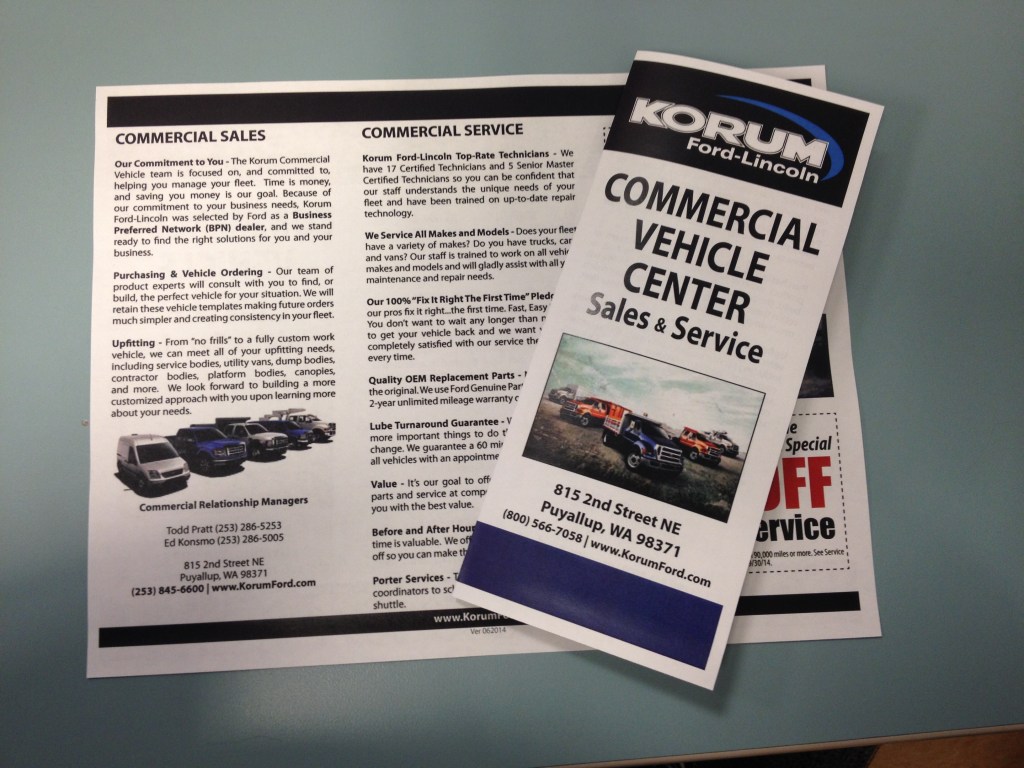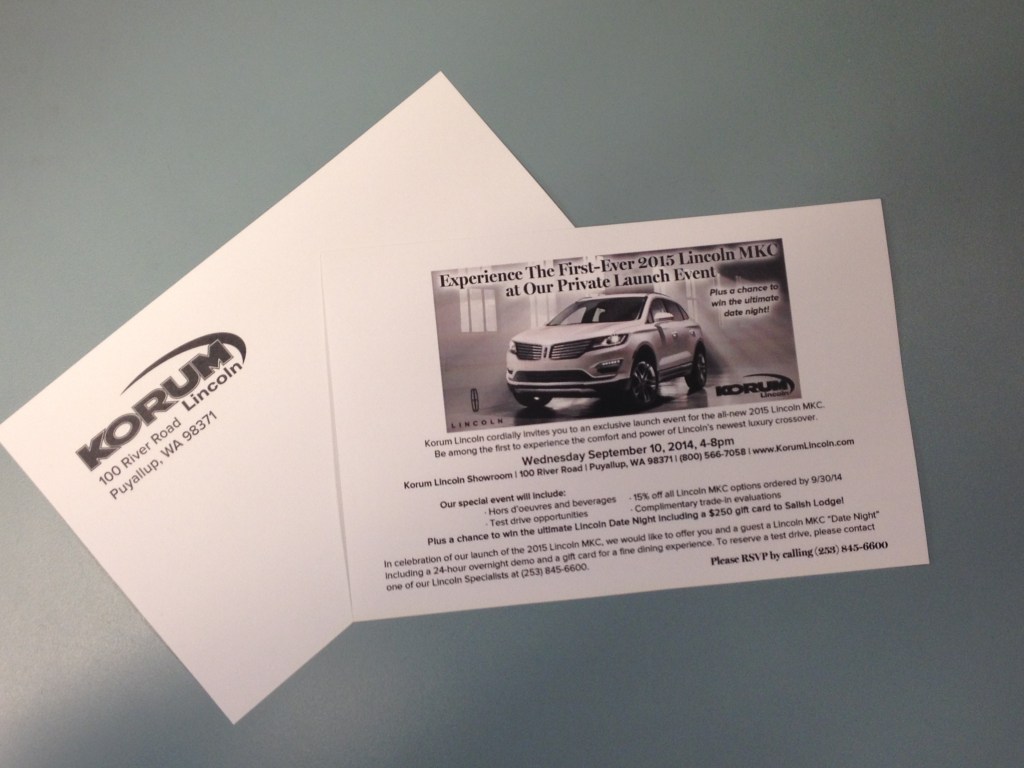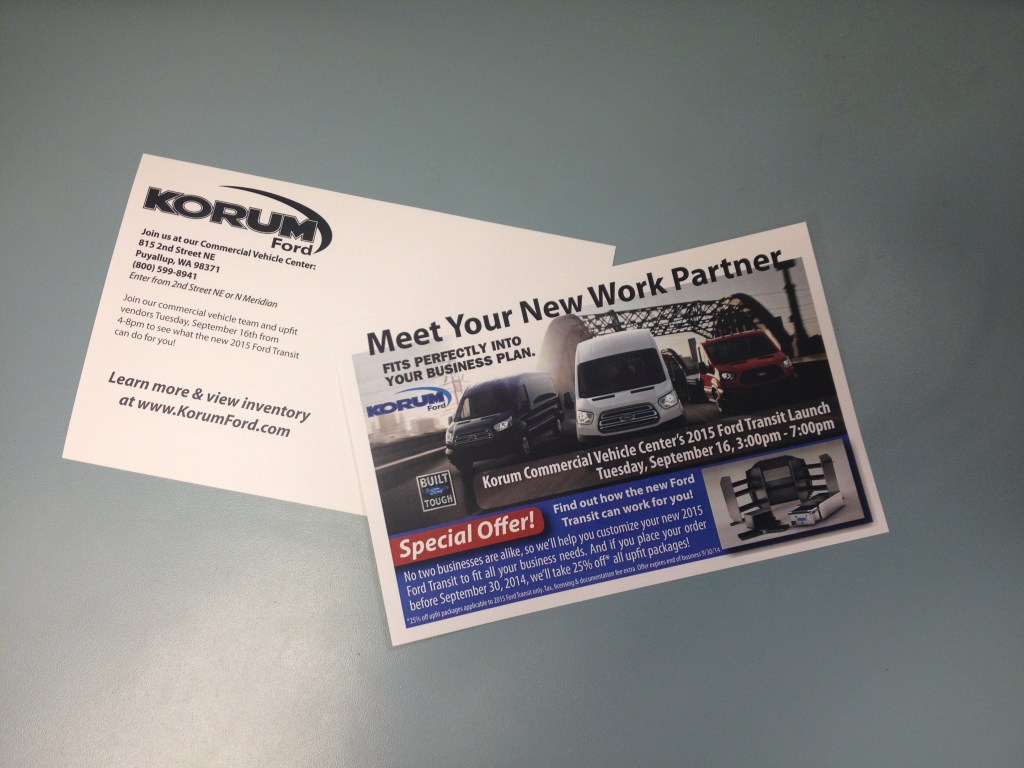
Designed print marketing materials that supported sales, service, and promotional campaigns while improving turnaround times, maintaining OEM compliance, and reducing outsourcing costs.
Project Snapshot
| Organization | Korum Automotive Group |
| Role | Marketing Specialist |
| Timeframe | 2012 – 2014 |
| Primary Focus | Print design, marketing communications, brand compliance, production |
| Audience | * Vehicle buyers * Service customers * Commercial vehicle customers * Dealership staff * OEM representatives |
| Deliverables | * Tri-fold brochures * Service brochures * Postcards * Flyers * Promotional materials * Print-ready production files |
| Tools | * Adobe InDesign *Adobe Photoshop *Adobe Illustrator *Digital photography *OEM marketing assets *Commercial printing equipment |
The Challenge
As a multi-brand dealership group, we regularly needed professionally designed print materials to support vehicle sales, service promotions, commercial vehicle operations, and special events. These materials needed to communicate information clearly while meeting strict manufacturer brand standards and approval requirements.
Many organizations outsource this type of work, but outsourcing often introduced delays as designs moved back and forth between the dealership and external designers. Each revision could take days, slowing marketing campaigns and increasing costs. Because we frequently needed updated promotions, pricing, and event materials, a faster and more flexible approach was needed.
My Approach
Rather than relying on outside agencies for every project, I developed the skills to design much of our print collateral in-house. This allowed me to work directly with managers, sales staff, and service leaders to quickly gather information, photograph team members when needed, incorporate feedback, and finalize designs without lengthy revision cycles.
Compliance remained a critical part of every project. I became familiar with OEM branding standards, required disclaimers, approved fonts, and logo usage so materials could be submitted for manufacturer approval throughout the design process instead of waiting until completion. Catching potential issues early helped avoid unnecessary redesigns and kept projects moving forward.
I also looked beyond individual brochures and considered how each piece fit within a broader marketing campaign. Whether customers encountered a postcard, brochure, website banner, or email, I wanted every touchpoint to feel like part of a consistent experience.
What I Created
- Commercial Vehicle Center brochures
- Recommended maintenance schedule brochures
- Service department brochures
- Promotional postcards
- Event invitations
- Coupons and service offers
- Flyers and printed marketing collateral
- Print-ready production files
- Photography for marketing materials
Results & Impact
Creating these materials internally helped the dealership respond more quickly to changing promotions while reducing dependence on outsourced design services.
This work contributed to:
- Faster turnaround on marketing projects
- Reduced outsourcing costs
- Consistent branding across print and digital campaigns
- Improved collaboration with dealership departments
- Simplified OEM approval process
- Efficient production of dealership marketing materials
- Better use of available marketing budgets through OEM co-op reimbursement programs
The experience also expanded my understanding of print production, design standards, and the importance of creating marketing systems rather than isolated pieces.
My Process

Observe
I noticed that outsourced design work often introduced unnecessary delays, even for projects that required only minor revisions. Meanwhile, the dealership needed marketing materials that could be updated quickly.
Understand the Goal
The objective wasn’t simply to produce brochures. It was to create professional, compliant marketing materials that could be developed efficiently while supporting sales, service, and promotional initiatives.
Remove the Friction
By bringing much of the design process in-house, I reduced communication delays, created reusable templates, coordinated directly with stakeholders, and streamlined OEM approval.
Design for People
Customers benefited from clear, well-organized marketing materials, while dealership staff could request updates and collaborate directly throughout the design process. Consistency across campaigns also made promotions easier to recognize and understand.
Measure Adoption
As more print projects were completed internally, the process became the preferred approach for many marketing materials. Faster turnaround and easier collaboration demonstrated the value of keeping design work close to the business.
Refine & Improve
Each project strengthened my understanding of print design, production requirements, and brand standards. Over time I refined templates, improved workflows, and became more efficient at moving projects from concept to printed collateral.
Key Takeaways
This project reinforced that good design is only part of an effective marketing process. Equally important is understanding how work moves from concept to approval to production while balancing deadlines, budgets, and brand standards.
It also strengthened my appreciation for developing practical skills that create flexibility for an organization. By learning new design tools and production processes, I was able to help the dealership complete projects more quickly, reduce outsourcing costs, and make better use of available marketing resources.
Finally, this experience shaped a mindset I’ve carried throughout my career: don’t let limited resources become a barrier to solving problems. I’ve often found that creativity isn’t just about design – it’s also about finding practical ways to accomplish meaningful work with the tools and budget available.
Featured Work Samples